Resources
How to Start a Private Label Dog Chew Brand
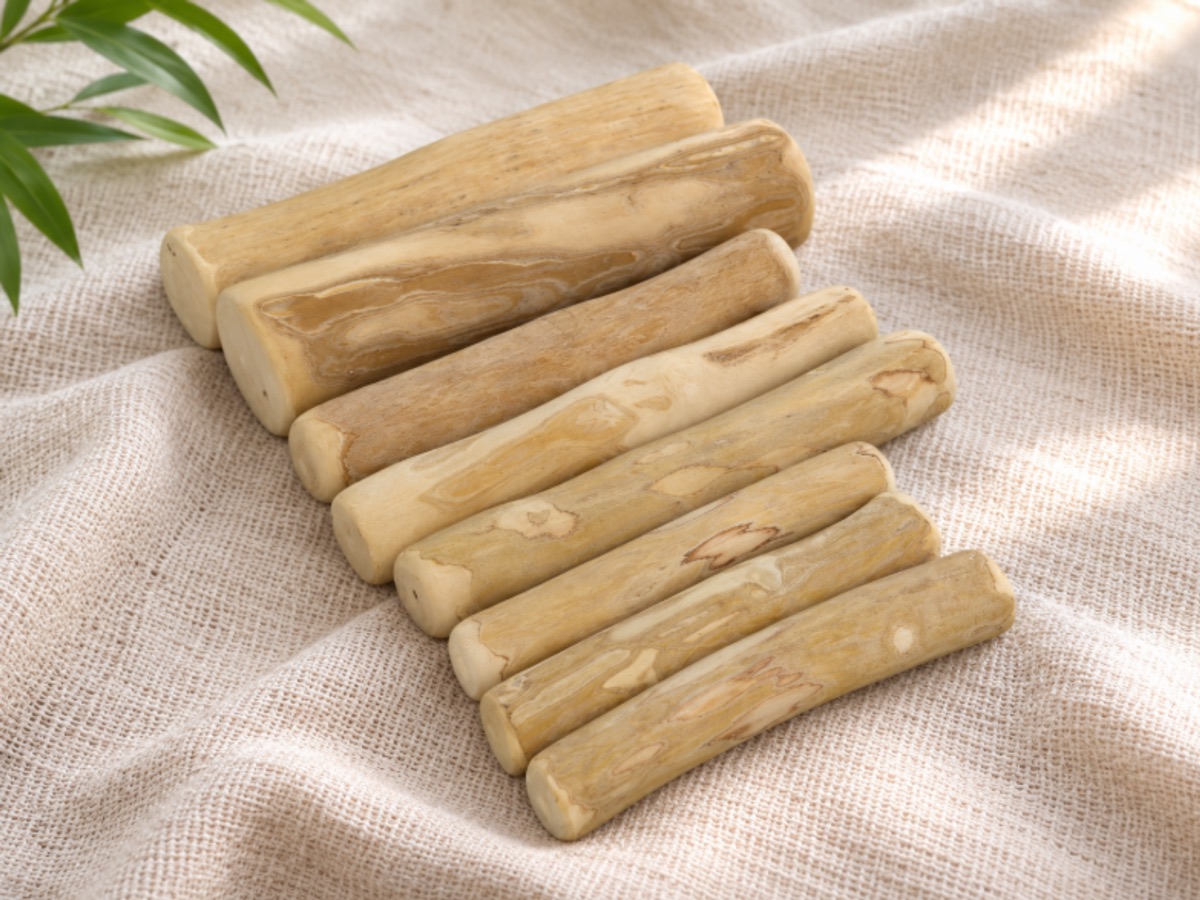
Launching a private label pet product used to mean committing to a factory-scale order before you knew whether the category would sell. That's changed — and coffee wood chews are one of the more approachable categories to start with, for a few structural reasons worth understanding before you commit budget.
1. Pick a category with a low barrier to a first order
Some pet product categories (kibble, supplements, treats requiring food-safety certification) carry MOQs in the tens of thousands of units and multi-month lead times before you see a finished product. Coffee wood chews sit at the other end of the spectrum: a single natural material, no formulation, and — depending on branding format — a starting MOQ as low as 50–500 pieces. That means you can validate demand with a real product in customers' hands before scaling inventory.
2. Decide how much of the product should carry your brand
Private label isn't all-or-nothing. There are a few common starting points:
- Plain, unbranded product — fastest and cheapest, good for testing whether the category sells at all before investing in packaging.
- Laser-engraved logo on the chew itself — a low-cost branding step that turns a generic chew into a recognisable SKU without a packaging redesign.
- Custom kraft or colour-box packaging — full retail presentation with your artwork, suited to a store shelf or a polished Amazon listing.
Most brands we work with start with laser engraving or simple kraft packaging, then move to a fuller custom box once the SKU proves itself. See our private label page for what each option typically costs and requires.
3. Get your specifications in writing before production starts
A private label order should come with a clear, written specification: sizes, quantities per SKU, packaging materials, artwork requirements, and a target ship date. If a supplier is vague about any of these before you pay a deposit, that's a signal to ask more questions, not fewer.
4. Build in a proof step before the container ships
However good your supplier's QC process sounds on a sales call, ask for photographic or video proof of your actual production run — your logo, your packaging, your cartons — before the shipment leaves the factory. This is the single most effective way to catch a mismatch (wrong size mix, misprinted packaging, damaged cartons) while it's still fixable, rather than discovering it after a six-week ocean transit.
5. Plan your first reorder before you place your first order
A private label launch isn't finished when your first shipment arrives — it's finished when you've confirmed you can reorder the same specification reliably. Ask your supplier how consistent their material spec is batch to batch (for coffee wood, that means asking about wood source and moisture control — see our safety and material guide), so your second order isn't a surprise.
Selling on Amazon? Plan for FBA from day one
If you are an Amazon seller, choose a supplier that offers full service Amazon FBA prep: FNSKU labels, case packs and labeled master cartons handled before shipment. See how it works on our Amazon FBA page, or explore private label options for retail shops if you sell through pet stores.
Where to start
If you're evaluating coffee wood as your first — or next — private label SKU, the fastest path is a small sample order: see the product yourself, confirm sizing against your target customer, then move to a private label quote once you're confident in the category. Request free samples to get started.