Resources
Coffee Wood Dog Chews from Vietnam, from Coffee Farm to Your Shelf
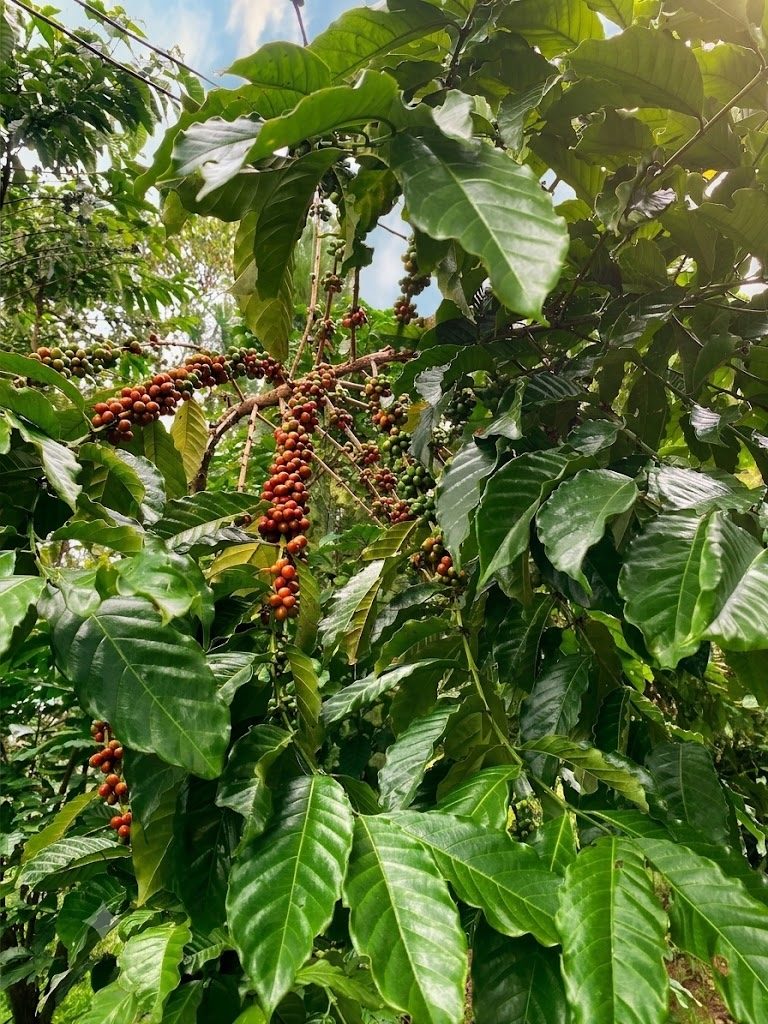
WINVN's coffee wood dog chews from Vietnam begin with something coffee farmers in the Central Highlands do in regular cycles: replacing trees that have grown old. Trunks that would otherwise be discarded are kept, and some of them become a chew stick sitting on a pet shop shelf halfway around the world.
This article follows that journey, from the growing region and the farmers to our workshop. I'm writing it so that you, the person selling this product, have a true story to pass on to your own customers.
Where the coffee wood grows: Dak Lak and Gia Lai
WINVN's two coffee wood factories sit in Dak Lak and Gia Lai, right inside the Central Highlands growing region. The wood doesn't have to travel far to reach the workshop.
The coffee here is Robusta, grown on red basalt soil at 500 to 800 meters above sea level. Anyone who has traveled through this region remembers the deep red earth that sticks to your shoes and your tires, and the coffee farms running one after another along both sides of the road.
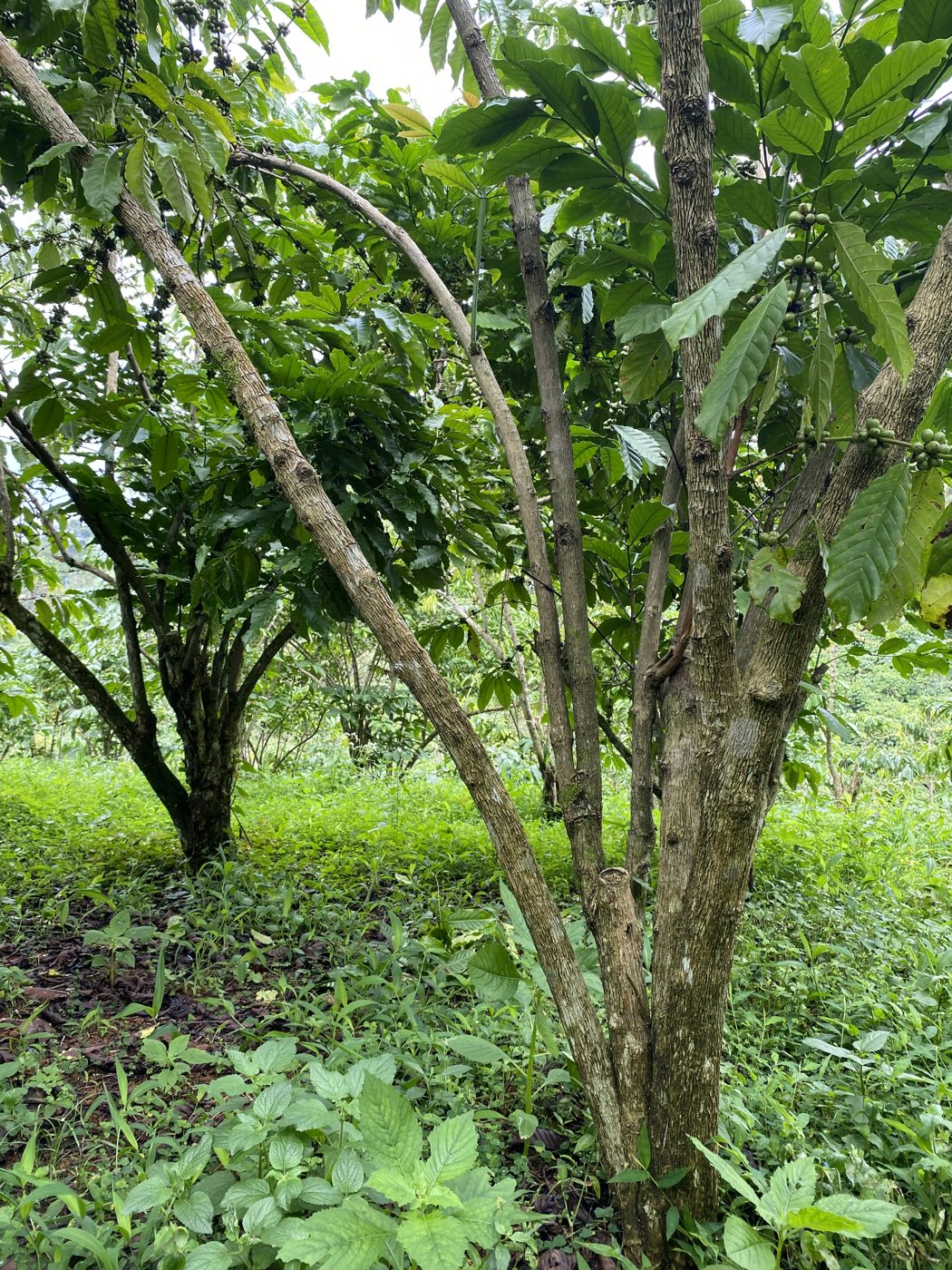
Farmers and coffee trees over 20 years old
A coffee tree doesn't bear fruit forever. Past a certain age, farmers have to replace old trees with young ones. In Vietnam this is called tái canh, or replanting.
The wood WINVN uses comes from the trunks of Robusta coffee trees 20 years old or more, trees that farmers replace during replanting. In other words, no tree is cut down to make a dog toy. A tree is replaced because the farm needs it, and its trunk is put to use again instead of being thrown away.
For me, this is the part of the story most worth telling. A tree that has given more than twenty harvests still has one more use left in it when it leaves the farm.
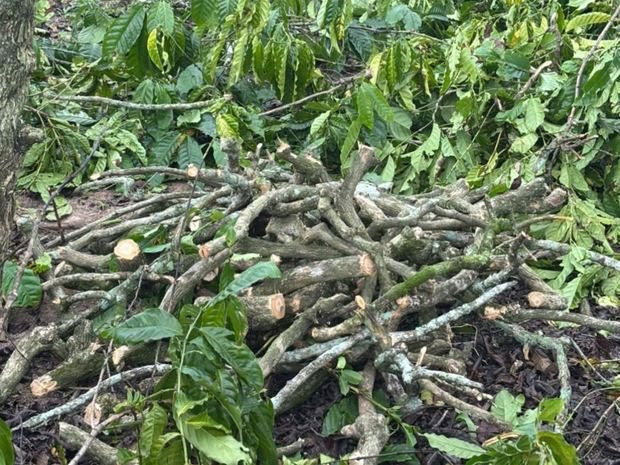
From tree trunk to dog chew
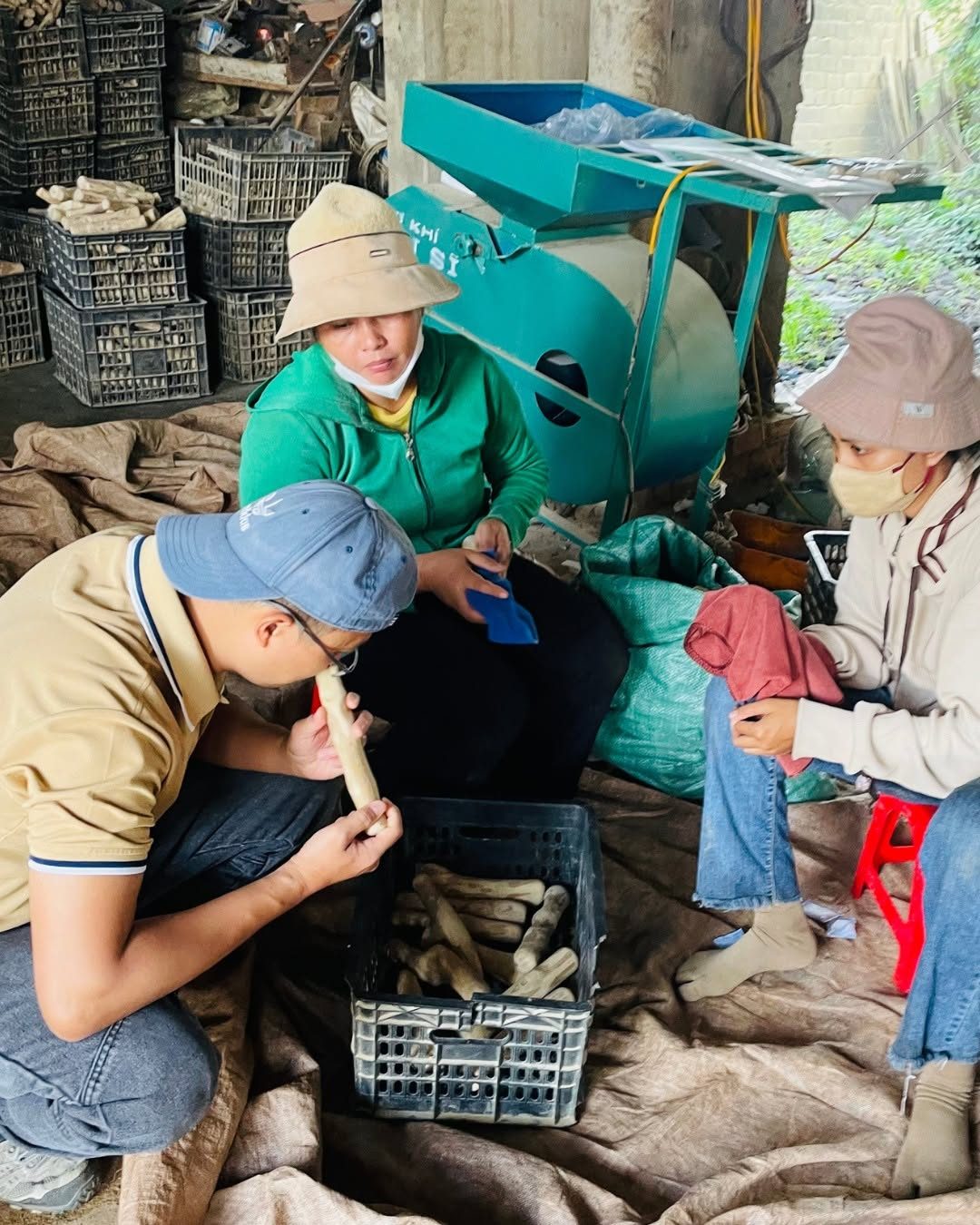
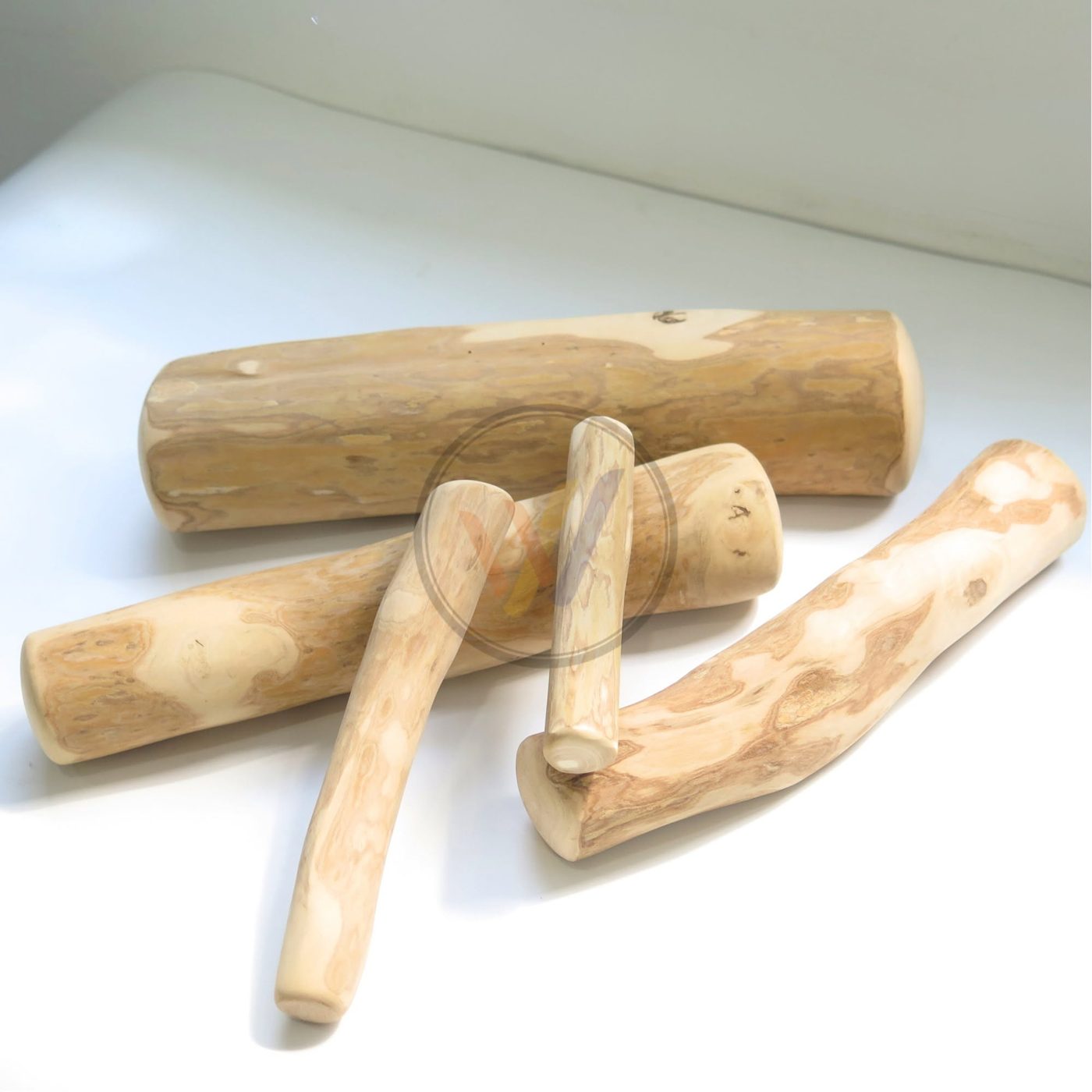
Once the trunks arrive at the workshop, they go through sawing, sanding and drying. Each stick is cut to a fixed size chart, from XS for dogs up to 3 kg to XXL for dogs 20 kg and over.
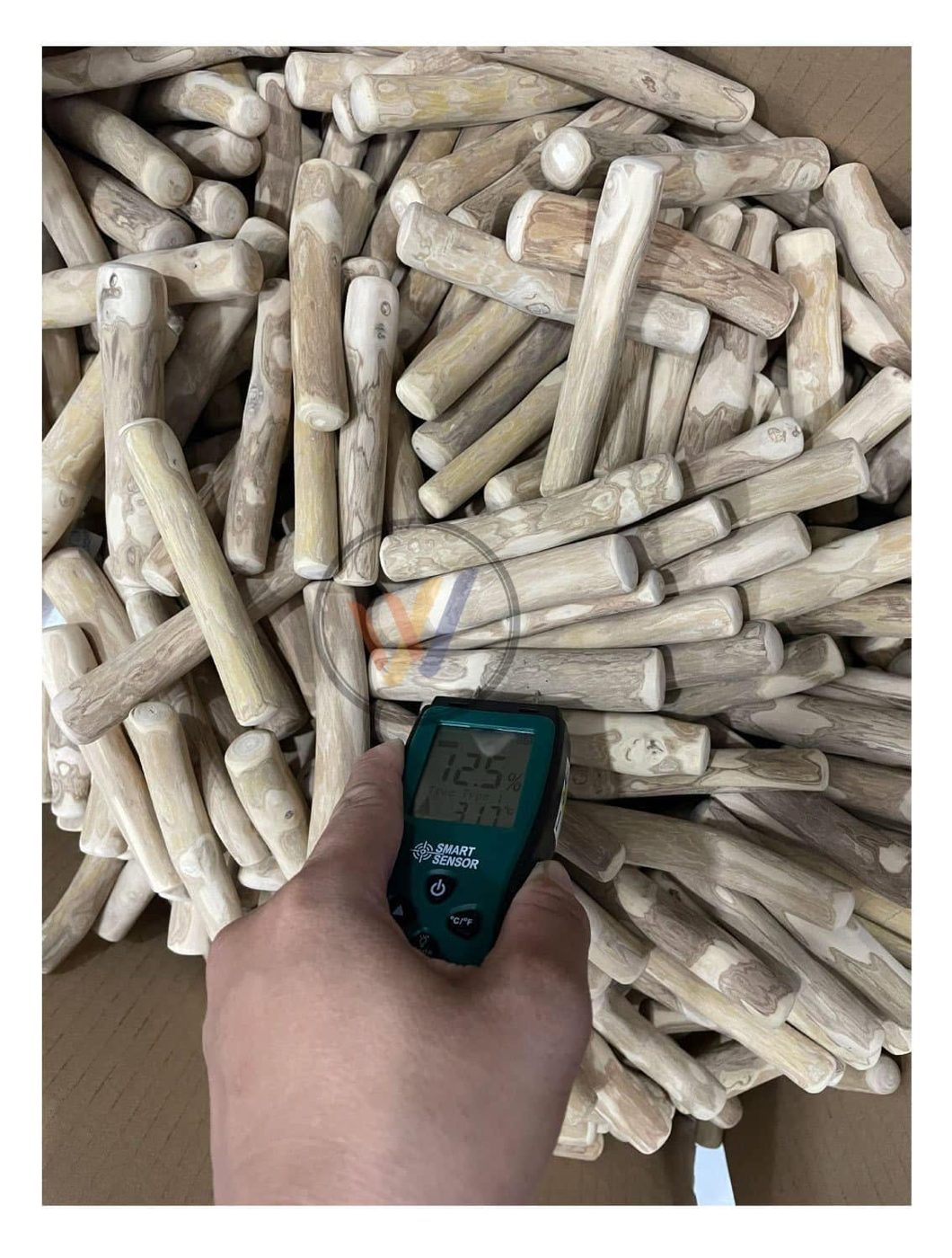
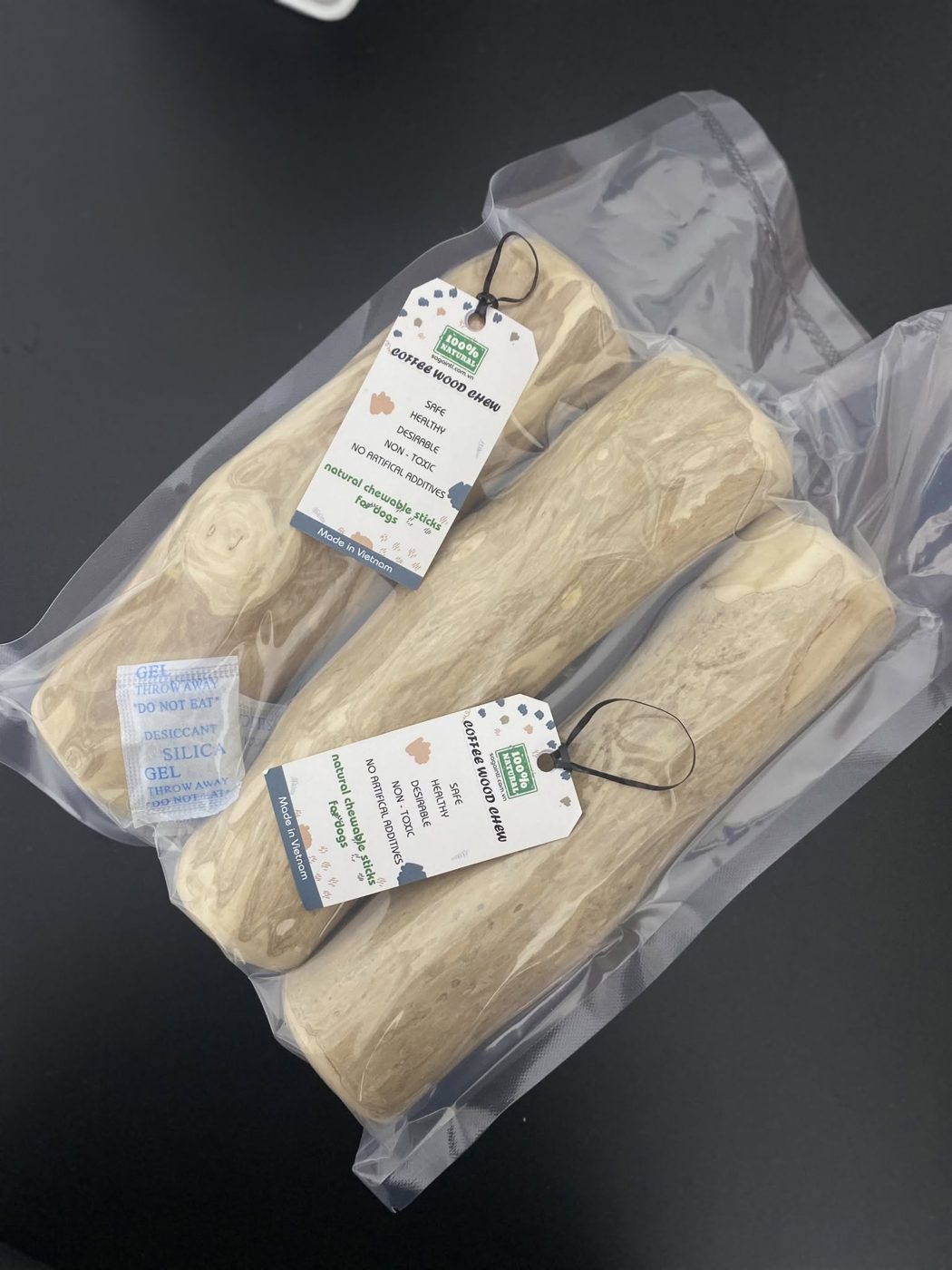
The step I talk about most with customers is moisture testing. The wood is tested to below 14% moisture and only then vacuum-sealed, to hold that level through the ocean voyage and storage. Crossing the Pacific takes about 28 to 45 days, so if this step were skipped, the wood could easily absorb moisture again on the way.
Before packing, every order goes through a 5-step QC process at the workshop. The two things WINVN guarantees its customers are that the goods are free from wood borers and free from mold.
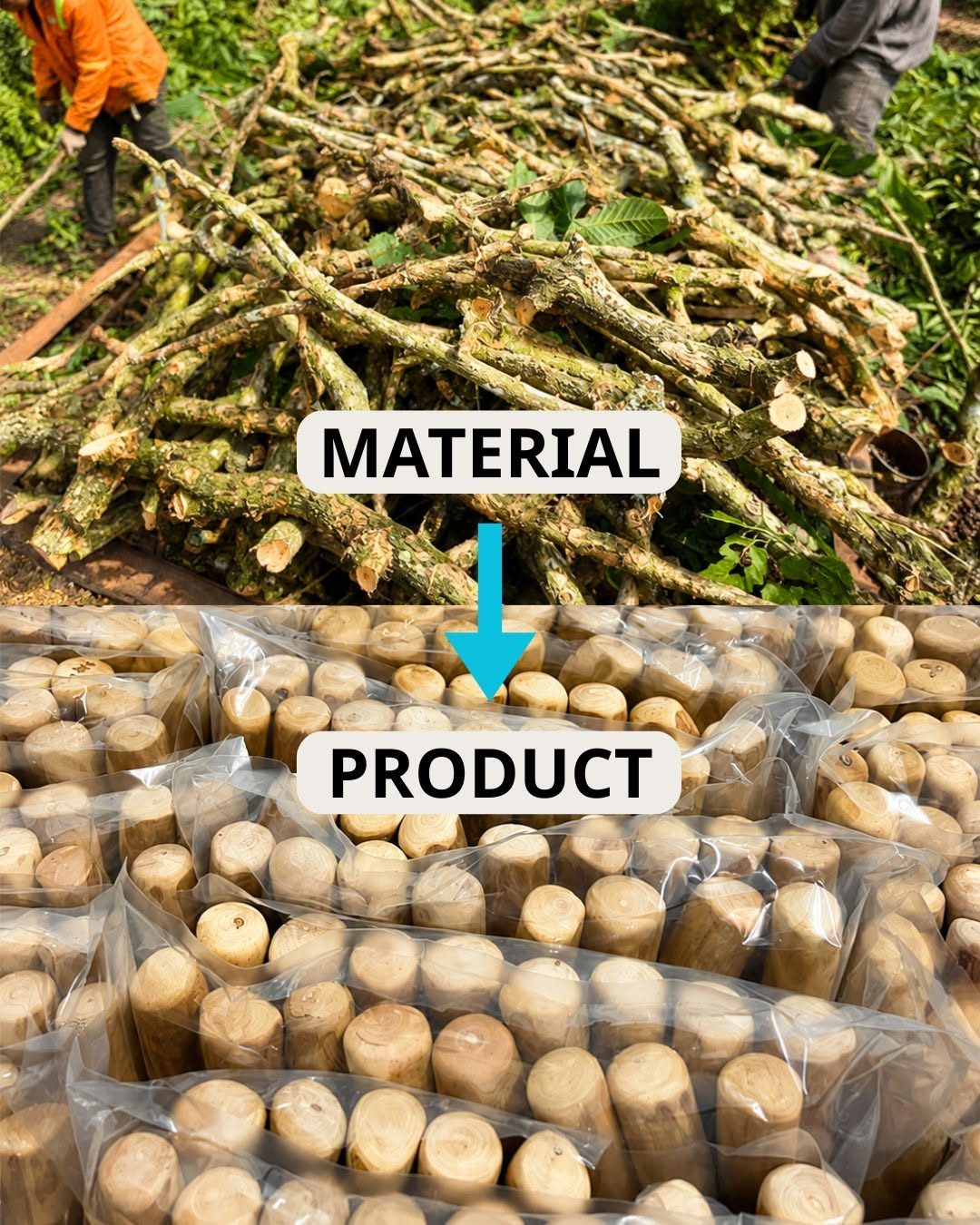
Why coffee wood works as a dog chew
As a dog chews, coffee wood gradually wears down into soft fibers rather than breaking into sharp splinters. That's the reason this wood was chosen as a natural dog chew.
Because it's natural, every stick has its own shape and varies a little in size. You can treat that as something to share with your customers: each stick is a real piece of a tree trunk, not something pressed out of a mold.
What we do not claim
Buyers of natural products are increasingly wary of "green" stories with no evidence behind them, and they're right to be. So we only tell the parts we can back up: the age of the trees, the growing region, the moisture level, and how the wood is put to use.
We don't publish figures on farmer income or emissions reduced, because we don't yet have reliable measurements for those. When we do, we'll publish them along with the source.
How to use this story in your shop
If you run a pet shop, you can print three facts on a hang tag or a small shelf sign: Robusta coffee trees over 20 years old · Grown in Dak Lak and Gia Lai, Vietnam · Wood reused from trees replaced during replanting. However far your customers want to dig, you'll have the answer.
If you sell online, the same facts work for your product descriptions and your brand's About page. Once your order is in production, we also shoot a photo set specifically for that order for you to use. Planning your own brand? Our private label guide covers logos, packaging and MOQ.
To see more photos of the farms and the workshop, follow WINVN's official social media channels, where we post real photos and clips. You can also read more about our factory and quality process.
FAQ about coffee wood from Vietnam
Are trees cut down to make coffee wood chews? No. The wood comes from old coffee trees that farmers replace when they replant their farms.
Where in Vietnam does WINVN's coffee wood come from? From Dak Lak and Gia Lai in the Central Highlands, where WINVN operates two coffee wood factories.
How old are the coffee trees used for the wood? 20 years or older, Robusta variety.
How is the wood protected from mold? It's moisture-tested to below 14% at the workshop, then vacuum-sealed before export.
Bring coffee wood dog chews into your shop
WINVN has been an OEM/ODM manufacturer since 2019 and has exported to more than 40 countries. The minimum trial order is 50 pieces per SKU, and every customer gets 3 free samples; you cover the shipping, the shipping cost can be credited against your first order, and our sales team will confirm the details.
Send us your market, sales channel and estimated quantity through our inquiry form or at helen.nguyen@winvnint.com, and we'll advise you on the specifics.